
Author:WuyTime:2024-10-25 08:43:20
The commonly used laboratory ventilation equipment mainly includes fume hoods, atomic absorption hoods, universal exhaust hoods, desktop ventilation hoods, etc.
(1) A fume hood is a ventilation device used for safe handling of harmful gases or vapors. Its function is to capture, seal, and transfer pollutants and harmful gases, allowing them to escape into the laboratory. By inhaling pollutants from the work area, the operator's exposure to pollutants is reduced. The airflow inside the detoxification cabinet is drawn into the laboratory through an exhaust fan, which dilutes the polluted gas inside the cabinet and exhausts it outdoors through a ventilation system, achieving low concentration diffusion.
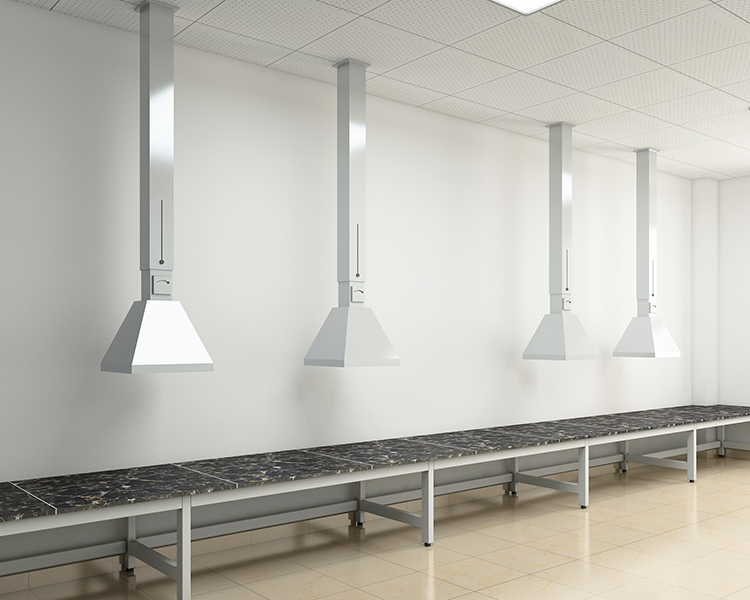
(2) Universal exhaust hood is the preferred choice for local ventilation, with simple installation and flexible positioning. Good ventilation performance can effectively protect the personal safety of laboratory staff, suitable for liquid chromatography, gas chromatography, or experiments with low exhaust gas volume and no high temperature.
(3) Atomic absorption hoods are mainly suitable for large precision instruments such as atomic absorption meters that involve high temperatures and require local ventilation. They require positioning and installation, and are also one of the factors that must be considered in the overall laboratory planning.
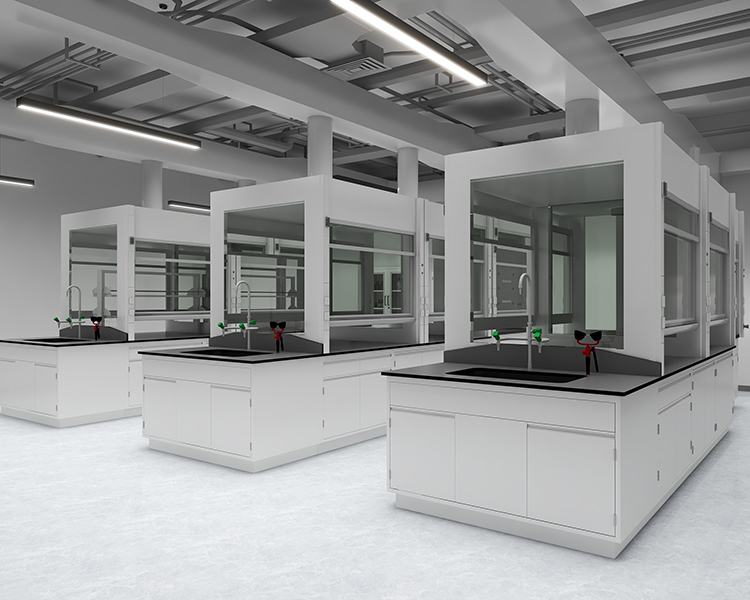
As an important component of the laboratory, the selection of manufacturers for fume hoods must be cautious. The product quality must be absolutely excellent, and the installation and construction team must be experienced to ensure the safe operation of the laboratory. Laboratories belong to the customization industry, and colleagues with excellent product quality and skilled installation and construction experience are also required to build a safe laboratory. Jiangsu Wuyue has 10 years of design and construction experience, and has been selected as the overall laboratory planning and construction unit by thousands of food and chemical enterprises in universities.
The commonly used fume hoods in laboratories are classified according to their exhaust methods: upper exhaust, lower exhaust, and simultaneous upper and lower exhaust.
To ensure uniform wind speed in the work area, a lower exhaust type should be used for cold process ventilation cabinets, and an upper exhaust type should be used for hot process ventilation cabinets. For processes with unstable heat generation, exhaust ports can be set up both above and below to adjust the proportion of exhaust volume according to the change in heat generation inside the cabinet, thereby obtaining uniform wind speed.
Ventilators are classified into three types based on the air intake method. The method of circulating indoor air inside the cabinet and then discharging it outside is called full exhaust, which is a widely used type.
When the fume hood is installed in a room with heating or temperature and humidity control requirements, in order to save energy consumption for heating and air conditioning, the method of taking supply air from outside and circulating it inside the hood before discharging it outside is called a supplementary air fume hood.
Another type is the variable air volume control type fume hood. A regular constant air volume system requires manual adjustment of the fixed blade air valve, adjusting the exhaust volume of the fume hood, and achieving the desired surface air velocity when the valve is adjusted to a certain angle. Variable air volume control is achieved by adjusting the sensor of the valve to change the air volume to a given surface wind speed. Of course, standard methods have low costs and variable air volume costs are high, making them suitable for high-precision applications.
Ventilation cabinets can be classified according to their usage status into integral, lower open, floor standing, double-sided, three sided glass, tabletop, integrated, and specialized ventilation cabinets designed for different experimental needs such as radioactive experiments, synthetic experiments, and perchloric acid experiments.
Firstly, all kinds of laboratory furniture in the laboratory comply with relevant regulations, and the material of the fume hood should have good physical and chemical properties, corrosion resistance, and easy cleaning.
Secondly, the countertop, lining board, side board, and selected water and air nozzles of the fume hood should all have anti-corrosion function.
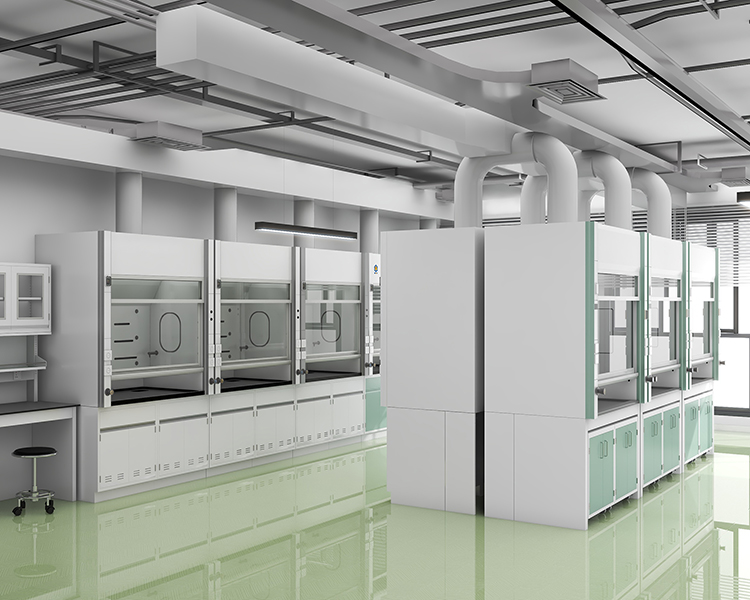
Due to the presence of many toxic and highly corrosive gases in laboratory gas emissions, it is necessary to filter the gases before discharging them into the atmosphere. Typically, vertical acid mist towers are used for acidic gases; Toxic and organic gases are treated with optical catalytic purification boxes. Two types of equipment are installed at the end of the exhaust system, the vertical acid mist tower is installed in the positive pressure section of the fan, and the optical catalytic purification box is installed in the negative pressure section of the fan.
The gas in the animal room is directly discharged into the atmosphere after initial and intermediate filtration, but is subjected to high-pressure jet treatment at the exhaust outlet, with a jet height of more than 3 meters. The design method of laboratory ventilation system requires certain standards and requirements for equipment, especially fume hoods.
Contact:Leon Li
Tel:0514-87669016
Phone:15801711895
E-mail:leon@wuylab.com
Website:http://www.wuylab.com/
Address:Room 2310, Building 1, Guotai Building, Hanjiang District, Yangzhou City