
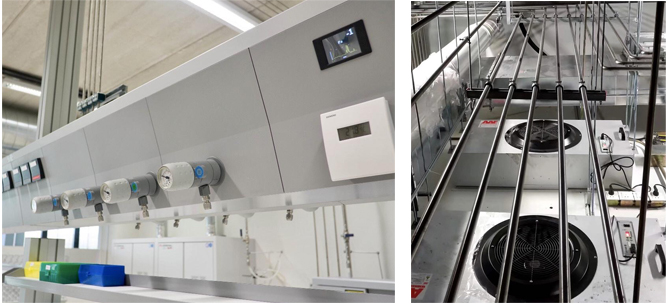
The laboratory gas pipeline includes control valves, filters, pressure reducing devices, pressure gauges, flow meters, online analyzers, etc., which should be centrally located in the gas inlet chamber. After being pressurized by blowers, compressors, pumps, boilers, etc., gas flows from the high-pressure part of the pipeline to the low-pressure part, and can also be transported by the gas's own pressure or gravity. When the gas flow rate is known, the size of the pipe diameter depends on the allowed flow rate or allowed frictional resistance (pressure drop). When the flow rate is high, the diameter of the pipe is small, but the pressure drop increases. But the operating energy consumption cost of power equipment such as pumps and compressors increases. In addition, if the flow rate is too high, it may also bring some other unfavorable factors. Therefore, the pipe diameter should be determined based on a comprehensive consideration of construction investment, operating costs, and other technical factors.
Contact:Leon Li
Tel:0514-87669016
Phone:15801711895
E-mail:leon@wuylab.com
Website:http://www.wuylab.com/
Address:Room 2310, Building 1, Guotai Building, Hanjiang District, Yangzhou City