
Author:WuyTime:2022-10-11 02:09:12
What is laboratory construction, and how to plan for it?
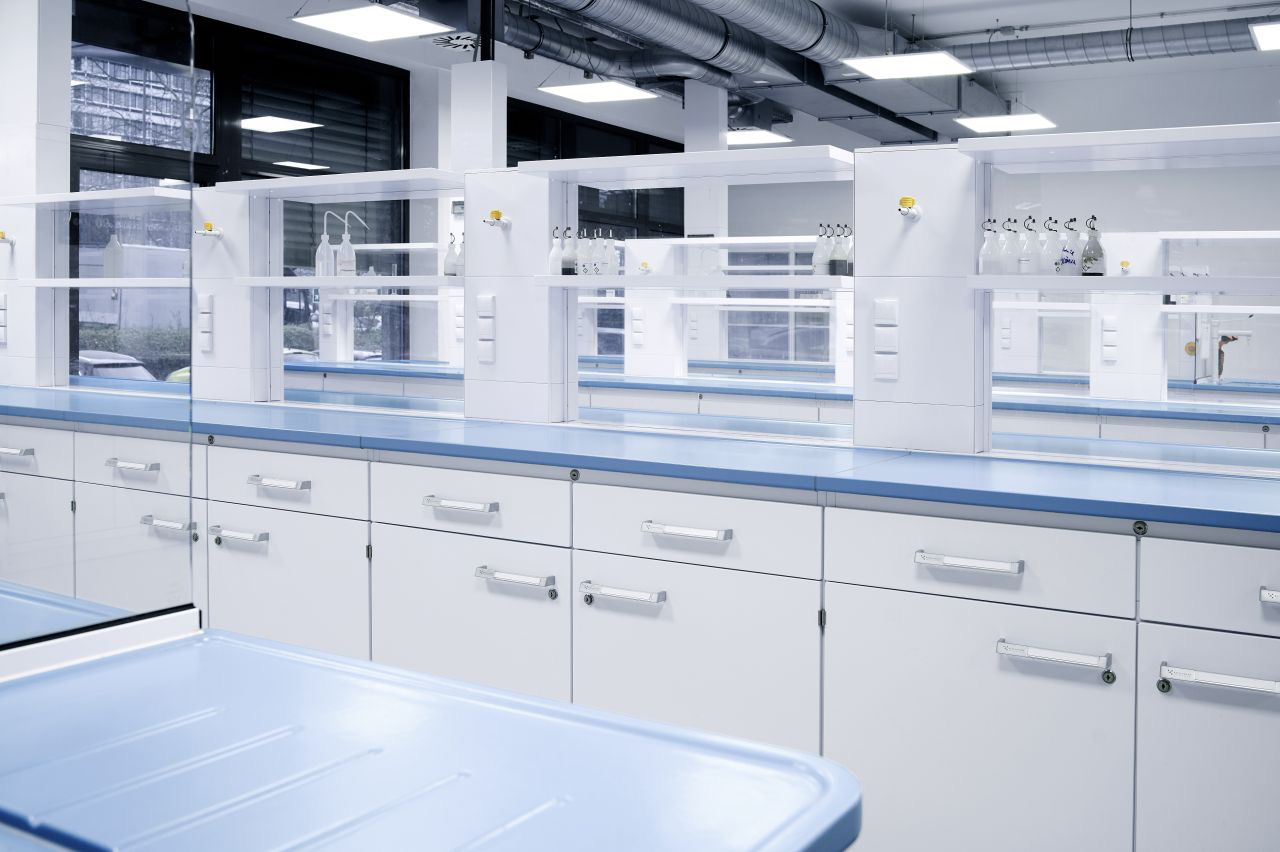
Laboratory construction includes updating technology and equipment, increasing the number of researchers, and improving the capabilities of existing researchers. The principle of laboratory construction is to meet the needs of optimizing laboratory work processes and daily management. The design mainly considers factors such as the process flow of the laboratory, the location selection of special laboratories and functional areas, the specific environment of the upper and lower floors of the building, and the building structure.
With the continuous development and progress of technology, higher requirements have been put forward for laboratory construction, especially for high-end laboratories. Therefore, I would like to share with you the preliminary planning and equipment configuration for general laboratory construction.
Pre laboratory preparation
Everything is established in advance, and failure to do so leads to failure. Similarly, meticulous and detailed preliminary planning is the key to the success or failure of laboratory construction.
Before conducting laboratory planning and design, it is necessary to first understand the overall plan of the target laboratory, including the nature, purpose, tasks, basis, and scale of the laboratory, and determine the laboratory functions and instrument equipment selection. The selection of instruments and equipment is the cornerstone of laboratory preparation and the foundation of overall laboratory planning. The selection of large instruments and equipment is directly related to the layout of related facilities such as water, electricity, ventilation, and gas paths, while the configuration of ordinary instruments and equipment is closely related to the division of laboratory areas. The usual practice is to determine the basic requirements of instruments and equipment according to relevant national standards and testing specifications, refer to existing practices in the same industry, and combine with one's own actual situation to determine the selection of instruments and equipment.
9 key points that cannot be ignored in laboratory planning!
The main contents involved in laboratory planning and design include layout, water supply and drainage, circuits, air routes, ventilation, safety passages, ceilings, floors, walls, etc. The planning and design need to be implemented during the laboratory civil engineering and decoration stages.
1. Layout plan
Determine the overall layout plan of the laboratory and clarify the laboratory layout. The laboratory requires effective isolation from the office area, clear division of functional areas, non-interference between experimental rooms, and unobstructed evacuation routes. In modern experimental research institutions, laboratories are usually classified according to physics, general chemistry, organic synthesis chemistry, and biology. Balance rooms, precision instrument rooms, high-temperature rooms, standard sample rooms, water preparation rooms, washing rooms, pretreatment rooms, warehouses, etc. are set up as needed. In laboratories in fields such as pharmaceuticals, medicine, food, agriculture, forestry, and animal husbandry, a highly reliable sterile and dust-free environment is essential.
In biological laboratories, special requirements for data processing workflows such as inspection, testing, photography, and washing are generally considered, and washing and drying stations can usually be set up at the inlet. Laboratories that use highly toxic substances and easily producible drug reagents must set up dedicated drug warehouses as required, with iron doors, iron windows, iron cabinets, and a 110 linkage alarm system.
2. Drainage
The water supply in the laboratory follows the principle of convenient access nearby, and hot water systems are installed in necessary places such as washing areas. The focus of drainage should be on the installation of floor drains and the high temperature resistance requirements of drainage pipe materials in the hot water discharge area.
3. Circuit
Circuit design must consider the overall power output, three-phase electrical requirements, and stability requirements for special instruments. For the convenience of operation and to meet the requirements of safety management, laboratories generally require the installation of independent control switches. A correct and good grounding system is essential for the normal, reliable, and safe operation of analytical laboratory instruments.
4. Gas path
There are two gas supply modes: centralized gas supply and individual gas supply. In principle, for special gas piping used in instruments, it should be as close as possible to analytical instruments.
5. Ventilation system
Ventilation is an essential component in laboratory design. In order to prevent laboratory staff from inhaling or swallowing toxic, disease causing, or toxic chemicals and organisms, there should be good ventilation in the laboratory. There are two ventilation methods in the laboratory, namely local exhaust and full room ventilation. Local exhaust refers to the immediate discharge of harmful substances in the vicinity after they are generated. This method can remove a large amount of harmful substances with less air volume, which is energy-saving and effective. It is a feasible and economical way to improve current laboratory conditions and is also the best way to adapt to modern laboratory ventilation construction. It is widely used. For some experiments where local exhaust cannot be used or cannot meet the requirements, full room ventilation should be used. Professional ventilation systems, such as sterile systems, must be self-contained. The focus of the ventilation system is the determination of the position of the air inlet and outlet and the pre embedding of the air outlet.
6. Safe channel
In laboratory planning and design, the importance of safe passages, especially the safety distance design in laboratory interior design, cannot be ignored.
(1) Safety door: used as an evacuation route. The door width is 900-1500mm, with single doors generally measuring 900mm and double doors available in sizes of 1200, 1400, 1500mm, etc.
(2) Safety distance: For the main channel, if two experimental benches are operated on both sides, the distance should be ≥ 1500mm; if operated on one side, the distance should be ≥ 1200mm; if there is a detoxification cabinet, the distance should be ≥ 1500mm, and special attention should be paid to not placing the detoxification cabinet near the door.
(3) Passage distance: The minimum width of a fire escape inside a typical building is 1200mm, while in a laboratory it is different and should be kept at least 1500mm wide.
7. Suspended ceiling
The height of the ceiling is generally not specifically required, but specialized systems such as aseptic systems have specific requirements for the height of the ceiling that must be paid attention to. At the same time, the construction of the suspended ceiling should also be considered in conjunction with the ventilation system facilities.
8. Ground level
Different floors should be used for different laboratories, and marble floors should not be used inside the laboratory. The most commonly used types now are PVC flooring and epoxy resin flooring, and some also use ceramic tiles. In addition to paying attention to the type, attention should also be paid to the position of the water supply and drainage pipes on the ground. 9. The position of the wall, including the columns, the height of the window sill, and the width of the skirting board, should be clearly determined.
9. Laboratory equipment specifications and selection
Laboratory equipment configuration is the determination of the specifications and selection of laboratory equipment based on laboratory planning and design. Laboratory equipment is an emerging industry that has been segmented from the furniture industry and is constantly becoming standardized and specialized in its development process. The laboratory equipment configuration mainly includes the layout mode, structural dimensions, tabletop selection, fume hood selection, experimental cabinet selection, and safety facility configuration of the experimental bench.
Layout Mode
The key to the layout of the experimental bench is safety and convenience, and there are several commonly used modes:
(1) Island type. It is the most common pattern. Often used in large spaces and long square indoor forms. The characteristic of this mode is smooth flow of people;
(2) Peninsula type. This is also a typical application method, which is suitable for narrow rooms;
(3) L-shaped. L-type is suitable for relatively narrow room forms;
(4) U-shaped and straight (i.e. side experimental platform) layouts are also commonly used.
structural dimensions
The structure of laboratory equipment can be divided into all wood structure, steel wood structure, and all steel structure. The laboratory can choose different types of experimental benches according to specific situations. The size of laboratory equipment directly affects the convenience and comfort of use. The height of a seated workbench is usually between 750-850mm, and if there is a high proportion of male experimenters, a height of 900mm can also be considered; The height of the standing workbench is between 850-920mm, while the height of the workbench in the high-temperature chamber is between 450-600mm; The length of the workbench is usually considered to be 1200mm per person (the minimum should not be less than 1000mm), while the organic chemistry experimental platform needs to be considered to be longer, taking 1400-1600mm; the height of the reagent rack is between 1200-1650mm, and the height of the high cabinet can reach 1800-2000mm; the depth of the workbench is generally 750mm, and the depth of the workbench in the high-temperature chamber is generally required to be between 850-900mm.
10. Laboratory countertop
The commonly used countertop materials currently include the following:
(1) Epoxy resin: mainly composed of reinforced epoxy resin, with consistent internal and external materials. It can be repaired and restored when damaged. It is resistant to acid and alkali, impact, and high temperature (about 800 ℃), and has a relatively high cost.
(2) Corrosion resistant solid psychological board: It is made of high-quality multiple paper clips, soaked in a special phenol solution, and formed by high-pressure thermosetting effect, and then subjected to special corrosion resistant surface treatment. It has the characteristics of acid and alkali resistance, impact resistance, heat resistance, and is economical and durable.
(3) Qiansi board: composed of 70% wood fiber and 30% melamine resin, melamine is attached to the surface layer using dual electron beam scanning technology, and is formed under high temperature and high pressure. Its resistance to high temperature and corrosion is average.
(4) Corrosion resistant physical and chemical adhesive panel: made of kraft paper impregnated with special phenolic resin, white and special surface paper treated with high temperature and high pressure, with acid and alkali resistance, impact resistance, and heat resistance, but must be used in conjunction with the substrate.
11. Laboratory fume hood
A fume hood is the most commonly used local exhaust equipment in laboratories, with a wide variety of types. Due to its different structures and usage conditions, its exhaust effect varies. The performance of a fume hood depends mainly on the speed at which air moves through it.
There are five types of fume hoods used in the laboratory:
(1) Xiang style fume hood: This type of fume hood is characterized by a simple structure, easy manufacturing, and is suitable for occasions where heat is generated.
(2) Slit style fume hood: Slit style fume hood is equipped with exhaust slits at its top and back, which can achieve good results for various working conditions. But the structure is more complex and the production is also more complicated.
(3) Bypass type fume hood: When the laboratory considers using an amplitude fume hood to remove indoor air, this type of fume hood is ideal because it does not affect the indoor air exchange rate when the cabinet door is fully closed.
(4) Supplemental ventilation hood: For laboratories or clean laboratories with air conditioning systems, this type of ventilation hood is ideal as it saves energy without affecting indoor airflow organization.
(5) Active fume hood: In modern laboratory buildings, sometimes a universal laboratory (experimental hall) is also equipped, where equipment such as experimental workbenches and water basin fume hoods can be moved at any time and can be pushed into adjacent storage rooms when not in use. This type of fume hood should be made of wood, plastic, or light metal for easy movement.
12. Experimental cabinet
Experimental cabinets include drug cabinets, drug cabinets, dangerous goods, glassware drying and storage cabinets, clean cabinets, and biosafety cabinets.
(1) Sample Cabinet: A sample cabinet used for storing various experimental samples, which should have compartments that can be labeled for easy storage and retrieval. Some samples may need to be stored in a dryer based on their physical properties and chemical stability, so the compartments can vary in size to facilitate the storage of different samples.
(2) Drug cabinet: mainly used to store solid chemical reagents and standard solutions, which must be classified and not mixed together. Chemical reagents should be placed in categories for easy retrieval. For safety reasons, the medicine cabinet should be equipped with glass doors and windows, and the cabinet body should also have a certain load-bearing capacity and corrosion resistance.
(3) Dangerous goods storage cabinet: suitable for simple and short-term storage of dangerous goods, made of stainless steel or refractory bricks.
(4) Glassware drying and storage cabinet: After cleaning, the finished glassware is stored on a rack, which is fixed to the cabinet with rails, making it easy to access and clean the glassware.
(5) Clean cabinet: also known as ultra clean workbench, widely used in industries such as biology, medicine, hygiene, electronics, precision instruments, and meters, providing a sterile and dust-free clean operating environment. Clean cabinets can be divided into horizontal laminar flow and vertical laminar flow according to the direction of gas flow. The specifications include single person, double person, single-sided, double-sided, and can also be used in series.
(6) Biosafety cabinet: widely used in colleges, research institutes, pharmaceutical factories, health and epidemic prevention units, it is the main clean equipment for microbial experimental operations. It can prevent the spread of toxic and harmful suspended particles that may exist, protect the safety of operators and the environment during the experimental process, and also protect samples from contamination during the operation process. In addition, safety protection facilities such as safety boxes for desk type eye wash stations; Supporting facilities such as universal exhaust hoods, PP sinks, work chairs and stools need to be determined synchronously during the laboratory equipment configuration process.
The preliminary planning and preparation work for laboratory construction is crucial, so our laboratory personnel must be vigilant because laboratory construction is different from ordinary indoor construction. We need to consider many factors to ensure a good laboratory environment. Therefore, preliminary planning is the key to the success or failure of laboratory construction.
Contact:Leon Li
Tel:0514-87669016
Phone:15801711895
E-mail:leon@wuylab.com
Website:http://www.wuylab.com/
Address:Room 2310, Building 1, Guotai Building, Hanjiang District, Yangzhou City